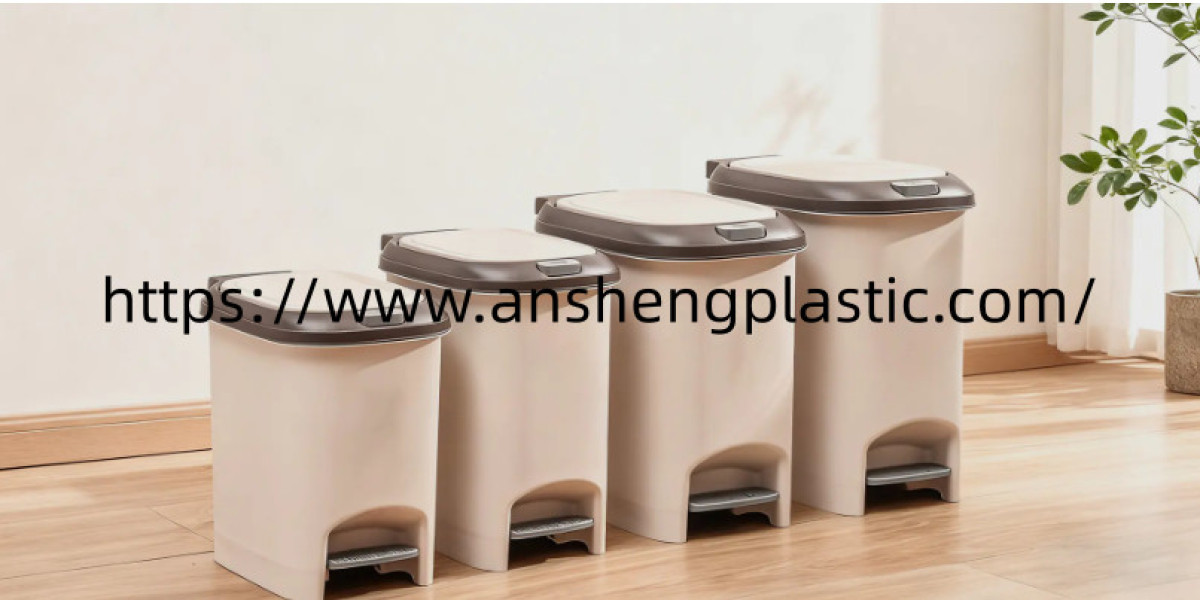

Businesses developing their own household product collections often need manufacturing solutions that go beyond selecting standard products from an existing catalog. Product appearance, structural details, packaging preferences, and customer expectations may vary considerably between markets. Working with an OEM Plastic Trash Bin Factory allows businesses to explore product designs that better reflect their brand positioning while relying on professional manufacturing processes to turn product concepts into finished goods.
The first stage of OEM cooperation is usually product requirement communication. Buyers need to identify the intended users, application environment, distribution channel, and preferred product appearance. A container intended for household kitchens may emphasize decorative design and convenient cleaning, while products for offices or commercial facilities may require a more straightforward appearance. These distinctions provide manufacturers with a clearer direction for evaluating possible product structures.
Material selection is one of the earliest technical decisions. Plastic materials differ in their molding behavior, flexibility, surface characteristics, and suitability for different environments. Manufacturers must consider these properties when evaluating a proposed design. A product with complex contours may require a different material approach from a simpler container with relatively uniform walls. The objective is to establish a practical relationship between material characteristics and the intended product structure.
The appearance development process involves more than choosing a color. Body proportions, surface texture, lid shape, opening design, and decorative elements all contribute to the product's identity. Buyers may provide sketches, reference images, or existing samples to communicate their expectations. Manufacturers can then assess how these ideas translate into a workable plastic product design.
Mold engineering is central to OEM manufacturing because it determines how the proposed product will be formed. The mold must accommodate the intended geometry while supporting appropriate material flow and product release. Curved surfaces, recessed sections, connecting structures, and other details need to be considered during mold development. Early evaluation can help identify design features that may create unnecessary production difficulties.
Production planning connects the design concept with manufacturing requirements. Once the mold and material approach have been established, manufacturers need to coordinate processing conditions and production arrangements. Consistency becomes especially important when businesses require repeated orders for the same product collection. Differences in surface appearance, color, or component fit can affect the overall presentation of a brand, so production management should address these details.
Functionality remains essential even when customization focuses heavily on appearance. A container should be comfortable to open, convenient to empty, and easy to maintain. If a design includes a lid or movable component, the interaction between those parts should be considered during development. Buyers should also think about whether the opening suits the types of waste commonly disposed of by the intended users.
Cleaning requirements influence product geometry. Containers with accessible interior surfaces and practical corners are generally easier to maintain. The relationship between the body and the liner should also be considered because users may need to replace bags frequently. A removable component can provide additional convenience, although its design should not make ordinary operation unnecessarily complicated.
OEM product development also requires attention to market differences. Consumers in different regions may prefer different colors, shapes, and household product styles. Some markets favor understated designs that match modern furniture, while others respond to brighter colors or more distinctive product appearances. Buyers with international distribution plans should communicate these preferences early so that product development reflects the intended customer base.
Packaging and branding can be discussed as part of the same cooperation process. Retail products may need packaging that presents product information clearly and supports shelf display. Wholesale buyers may have different requirements related to storage, handling, and transportation. Coordinating these considerations with product development helps create a more organized supply arrangement.
Communication is one of the most important elements of a successful OEM relationship. Buyers should provide clear feedback during design evaluation and sample review. Manufacturers should explain production considerations in understandable terms, especially when a requested design feature may affect mold complexity or manufacturing feasibility. This exchange helps both parties make informed decisions before moving into larger production arrangements.
Taizhou Ansheng Plastic Co., Ltd. focuses on plastic product manufacturing and the practical considerations involved in developing household plastic products. For businesses exploring customized product collections, understanding the manufacturer's production background and product development approach can help establish a useful starting point for cooperation. Discussions about application requirements, appearance preferences, and manufacturing processes can help clarify suitable product directions.
An effective OEM Plastic Trash Bin Factory should understand the relationship between customer expectations, product engineering, and production management. Buyers benefit from evaluating not only the finished sample but also the manufacturer's ability to communicate throughout the development process. To explore Taizhou Ansheng Plastic Co., Ltd. and its plastic manufacturing background, visit https://www.anshengplastic.com/ for further company and product information.