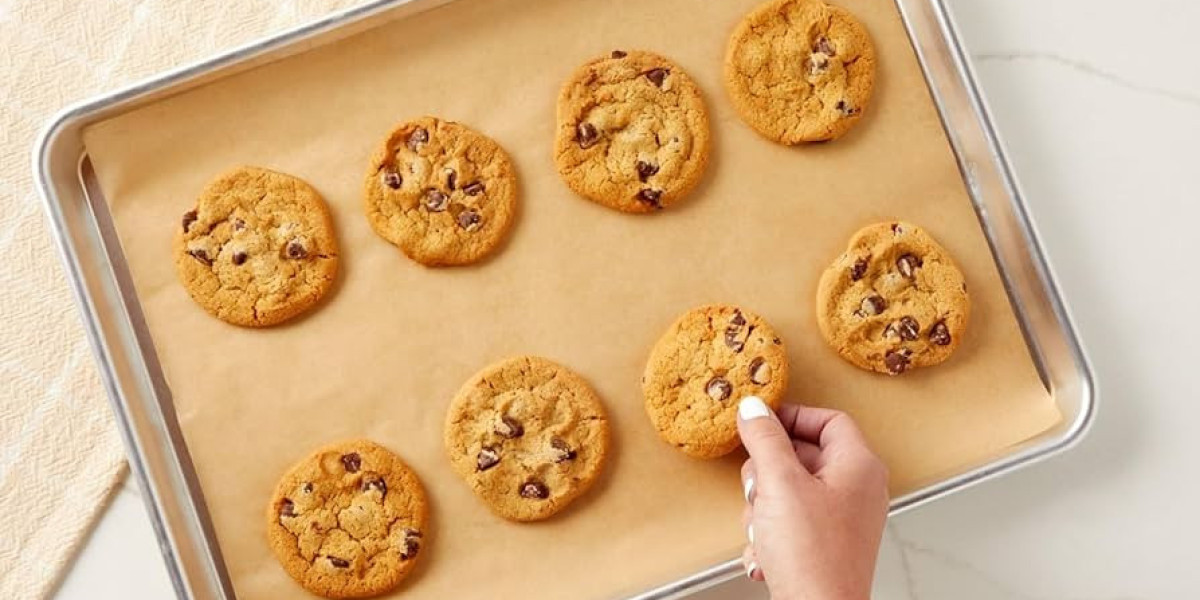

In commercial baking and food preparation, selecting suitable paper materials can improve workflow efficiency and support consistent product quality. Parchment Paper is widely used because its non-stick surface helps baked foods release more easily from trays and reduces food residue during preparation. Bakeries, restaurants, food manufacturers, and distributors rely on this material for different applications, making its base structure, coating technology, and handling characteristics important factors when evaluating product quality.
The foundation of baking paper is its base paper. Manufacturers generally select pulp fibers that provide suitable flexibility, strength, and surface consistency. These characteristics allow the material to pass through coating, cutting, and rewinding processes while remaining easy to handle during daily use. A uniform paper surface also helps the coating adhere more consistently. Variations in fiber quality or paper formation may influence the appearance and performance of the finished product, so raw material selection is an important part of production management.
The coating layer gives many baking paper products their characteristic non-stick performance. Silicone coating is commonly applied because it helps reduce adhesion between food and the paper surface. This makes it easier to remove cookies, pastries, bread, and other baked products after processing. Consistent coating coverage is essential because uneven treatment may lead to differences in food release. Manufacturers need to control the coating formulation and application process to maintain stable surface characteristics across the material.
Another important consideration is heat resistance. Baking paper is designed for use under suitable oven conditions, but its performance depends on the base paper, coating formulation, and actual operating environment. Different ovens and food processing methods may involve different temperatures and baking durations. Buyers should confirm the recommended temperature range and intended applications with the manufacturer before using a selected grade. Following product instructions helps maintain material performance and avoid unsuitable operating conditions.
Product formats can be selected according to the needs of different businesses. Rolls are useful for bakeries and food processing facilities that cut paper according to tray dimensions or production requirements. Pre-cut sheets offer convenience for restaurants and commercial kitchens that frequently use standard baking trays. Customized sizes may help distributors serve customers with specialized equipment or different preparation methods. Choosing appropriate formats can reduce trimming waste and simplify storage and handling.
The material is used across a broad range of food applications. Bakeries commonly use it for cookies, cakes, biscuits, bread, and pastries. Restaurants may use suitable grades for baking, food preparation, and certain presentation tasks. Food manufacturers can incorporate the material into production processes where clean handling and easier product separation are important. Some businesses also use it for portion separation or packaging-related applications, provided the selected grade is appropriate for the intended purpose.
Food-contact suitability should be considered when selecting paper for direct contact with food. Buyers should confirm that the product meets applicable requirements in the destination market and request relevant documentation where necessary. Information about material composition, coating properties, and recommended usage conditions can help purchasing teams assess whether a particular grade is suitable. Temperature limitations and storage recommendations should also be clearly communicated.
For wholesale buyers, product consistency and supply reliability are just as important as initial pricing. Variations in paper weight, coating coverage, roll winding, or sheet dimensions may affect production efficiency. Buyers should evaluate samples under actual operating conditions and check whether the material works with their existing trays and equipment. It is also useful to discuss minimum order quantities, customized packaging, production schedules, and repeat-order arrangements before establishing long-term cooperation.
Customization can help businesses match paper products to their specific markets. Available options may include natural brown or white paper, different grammages, roll widths, roll lengths, and pre-cut sheet dimensions. Distributors may also require private-label packaging to support their own product ranges. Clear communication about specifications and intended applications helps manufacturers prepare suitable products while reducing unnecessary production adjustments.
Choosing quality Parchment Paper involves evaluating the relationship between base material, coating performance, product format, and actual usage requirements. A suitable product can support convenient food release and more organized baking operations. Guanghe provides paper solutions for different commercial applications, and buyers can explore available products at https://www.guanghepaper.com/product/ to identify materials suited to their baking and food preparation needs.