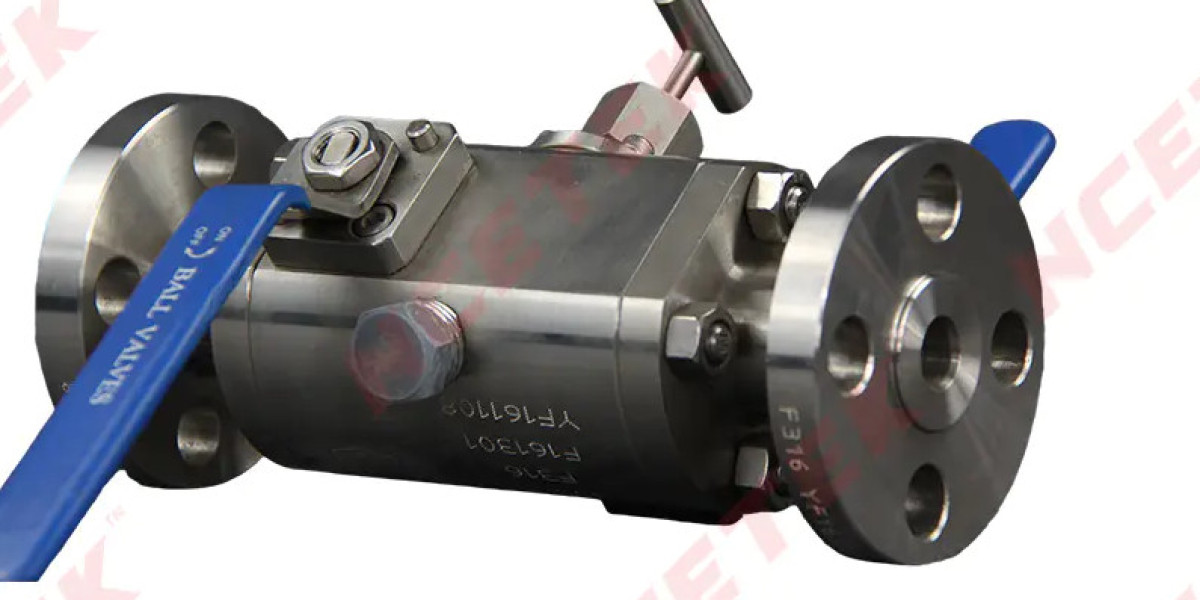

Industrial pipeline applications require valve structures that provide controlled operation, dependable shutoff, and compatibility with specific installation conditions. A Rising Stem Ball Valve Manufacturer must understand how stem movement, ball positioning, sealing arrangements, and operating mechanisms work together to meet the requirements of a particular project. Evaluating these engineering details helps buyers distinguish between different valve configurations and select equipment appropriate for their pipeline systems.
Ball valves generally control fluid flow through a spherical closure element containing a flow passage. In conventional designs, the ball rotates to align or misalign this passage with the pipeline. The operating mechanism transfers movement from an external actuator or manual device through the stem to the ball. The relationship between stem movement and ball rotation is therefore an important part of the overall mechanical design.
The term rising stem is associated with a stem arrangement in which the stem moves axially during operation. However, industrial buyers should not assume that every valve described as a rising stem ball valve uses the same internal mechanism. Depending on the specific design, the product may incorporate a combination of axial movement, rotational transmission, threaded components, and specialized sealing arrangements. Reviewing the manufacturer's sectional drawings and technical documentation is essential for understanding the actual operating principle.
Stem construction influences both mechanical performance and maintenance requirements. The stem must transmit operating forces while maintaining an appropriate sealing interface with the valve body. Its material, surface finish, dimensional accuracy, and connection with the ball must be selected according to the intended operating conditions. Stainless steel and other suitable engineering materials may be considered depending on corrosion exposure, mechanical loading, and project specifications.
The stem sealing arrangement is particularly important because the stem passes through the pressure-containing body. Packing systems, sealing rings, and other engineered sealing components may be incorporated depending on the design. Their function is to reduce leakage along the stem while allowing the required movement during operation. Proper assembly and maintenance are necessary because packing compression, surface condition, and operating cycles can influence sealing effectiveness.
Valve body construction must also support the intended mechanical arrangement. The body may be manufactured through casting or forging, depending on geometry, material requirements, pressure design, and production considerations. Cast construction can accommodate complex shapes, while forged construction may be selected for particular mechanical and material requirements. Both approaches require suitable material control and machining accuracy.
The ball and seat assembly determines the primary flow shutoff function. The ball surface needs suitable dimensional accuracy and surface finishing to establish consistent contact with the seating components. Soft seats may be considered for applications requiring suitable sealing characteristics within their material limitations. Metal seats can be appropriate for selected high-temperature, abrasive, or otherwise demanding services. Seat selection must account for the medium, temperature, pressure, leakage requirements, and expected operating frequency.
Operating torque is another important engineering consideration. Friction between the ball and seats, stem packing resistance, pressure-related loading, and mechanical transmission efficiency can all influence the force required to operate the valve. An actuator should therefore be selected using the actual valve torque requirements and the applicable operating conditions. Oversizing or undersizing an actuator without considering the complete assembly may create operational problems.
Temperature and pressure conditions also influence product selection. Thermal expansion can affect clearances and sealing interfaces, while changes in pipeline pressure may influence ball loading and operating torque. For applications involving significant temperature variation, engineers should review the material properties and sealing behavior of all relevant components. A design suitable for ordinary industrial water service may not be appropriate for cryogenic, high-temperature, or aggressive chemical environments.
Installation requirements should be evaluated before procurement. The valve's overall dimensions, connection arrangement, operating clearance, stem orientation, and accessibility can affect installation planning. Rising stem arrangements may require additional vertical clearance compared with certain conventional operating configurations. This factor is particularly relevant in compact equipment rooms, underground installations, and pipeline systems with restricted access.
Inspection and testing procedures should correspond to the actual design. Depending on applicable standards and project specifications, inspection may include material verification, dimensional checks, pressure testing, seat leakage testing, and operational checks. Manufacturers should also verify that the stem mechanism operates through its intended travel without abnormal interference. Documentation can help buyers confirm that the supplied configuration matches approved drawings and purchasing requirements.
Applications may include selected oil and gas facilities, industrial processing systems, power generation equipment, and specialized pipeline installations. The suitability of a particular design depends on the medium, operating conditions, installation arrangement, and project requirements. Procurement teams should request technical clarification whenever the product description does not sufficiently explain the stem movement or internal construction.
Zhejiang Naishi Valve Co., Ltd., operating under the NCETEK and Naishi Valve brands, provides industrial valve products for different pipeline applications. When evaluating a Rising Stem Ball Valve Manufacturer, buyers should prioritize clear design documentation, suitable material selection, manufacturing consistency, and testing arrangements. These factors help establish whether a proposed valve is appropriate for its intended service. Additional product information and available configurations can be found at https://www.ncevalve.com/product/.