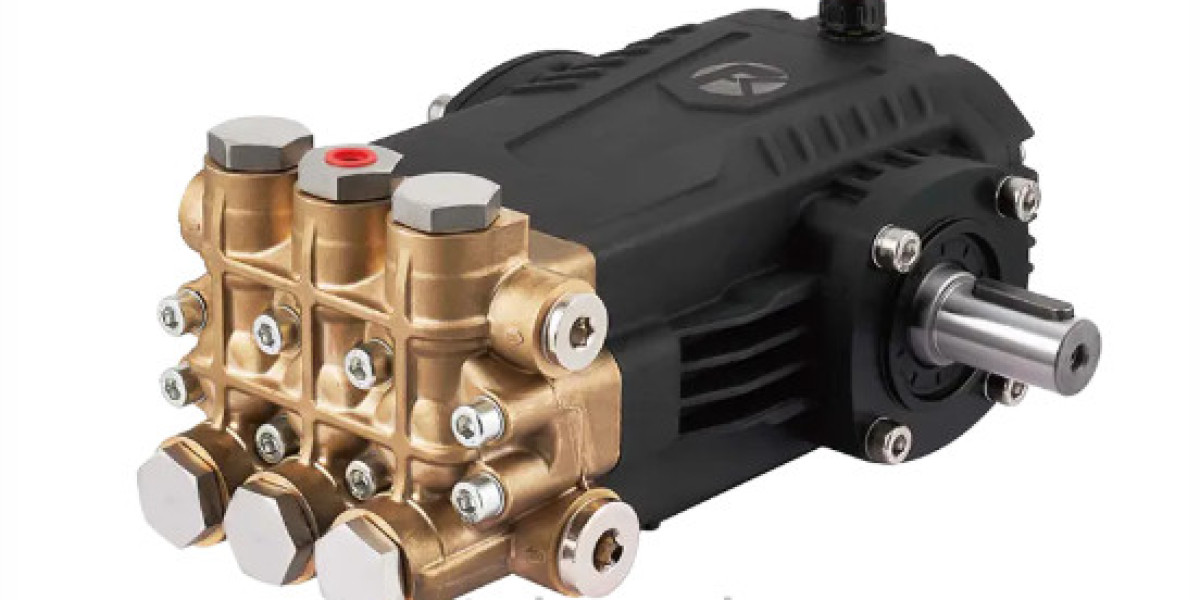

High-pressure pumping equipment is used in industrial systems that require a controlled supply of liquid against substantial resistance. A High Pressure Pump is not selected by pressure alone; its suitability depends on the required flow, liquid characteristics, duty cycle, drive source, and the equipment connected to its outlet. For manufacturers, distributors, and maintenance teams, understanding these factors makes it easier to specify a pump that performs reliably in its intended environment and can be serviced throughout its working life.
Reciprocating plunger pumps produce flow through repeated movement inside pumping chambers. When a plunger moves away from the chamber, the pressure inside falls and the inlet valve opens, allowing liquid to enter. As the plunger advances, the inlet valve closes and the liquid is pushed through the discharge valve. In a triplex configuration, three plungers work in sequence, distributing the pumping action across the drive cycle.
The fluid end contains components that directly contact the pumped liquid, including the pump head, plungers, seals, and inlet and outlet valves. Material selection should reflect the liquid's chemical properties, temperature, cleanliness, and operating conditions. Seal compounds and valve materials also require attention. Buyers should confirm compatibility with the manufacturer before specifying the equipment.
Pressure and flow describe different aspects of pump performance. Pressure is the force per unit area that the pump can develop against system resistance, while flow is the volume of liquid delivered over time. In surface cleaning, flow helps transport loosened material away, while pressure contributes to the impact of the water stream. The pump should therefore be selected together with its motor, nozzle, hoses, valves, and control equipment.
Industrial applications include machinery washing, vehicle and fleet cleaning, production-line maintenance, workshop sanitation, and the removal of deposits from compatible equipment surfaces. Specialized systems may also use high-pressure water for process cleaning or maintenance tasks. Operators must use the correct accessories and maintain safe distances, since high-pressure water can injure people and damage materials. Equipment should never be directed toward a person, and damaged hoses or fittings should be taken out of service.
Inlet conditions have a direct effect on pump operation. The supply should provide sufficient liquid without excessive restriction, air leakage, or unstable pressure. A blocked filter, undersized inlet pipe, or inadequate water source can cause cavitation and irregular operation. These conditions may create noise, vibration, heat, and accelerated wear. On the outlet side, all hoses, fittings, manifolds, and accessories must be rated for the intended service. A suitable pressure regulating or relief device is needed to control system pressure and protect components from unintended overload.
Installation planning should include the foundation, alignment, ventilation, access for inspection, and the arrangement of inlet and discharge pipework. Before commissioning, the system should be checked for leaks, correct rotation, adequate water supply, and proper operation of pressure controls.
Maintenance planning helps preserve performance and reduce unplanned downtime. Operators can monitor changes in sound, vibration, temperature, leakage, and cleaning results as early indicators of developing problems. Filters should be inspected and cleaned at suitable intervals, and fluid-end wear parts should be serviced according to operating conditions and manufacturer guidance. Before maintenance begins, isolate the power source, release trapped pressure, and confirm that the equipment cannot restart unexpectedly. Correct replacement parts matter because dimensions and material properties affect sealing and valve operation.
Duty cycle is another important consideration. Some machines operate for short cleaning periods with pauses between tasks, while production facilities may require extended or repeated operation throughout a shift. Continuous service places different demands on cooling, lubrication, seals, and maintenance scheduling than intermittent use. Buyers should explain how often the pump will run, how long each operating period lasts, and whether the unit will start and stop frequently. Where the discharge flow creates noticeable pulsation, a correctly selected pulsation dampener may help stabilize the line and improve the behavior of downstream equipment. Such accessories must be selected for the system's operating conditions.
Environmental conditions should also be considered during specification. Dust, moisture, vibration, ambient temperature, and the possibility of freezing can influence the installation and protection required. A pump used outdoors may need a suitable enclosure and a planned method for draining or protecting the fluid end during cold weather. In locations where access is limited, the layout should leave enough room to inspect seals, valves, filters, and drive components.
For procurement teams, the selection process should begin with a clear description of the application. Provide the required pressure and flow, pumped liquid, water quality, operating schedule, power supply, installation environment, and available space.
A High Pressure Pump is suitable when its mechanical design is matched to the real operating conditions. Careful attention to liquid compatibility, inlet supply, pressure control, installation, and maintenance can support dependable service while helping protect connected equipment. When comparing configurations for industrial cleaning or other liquid delivery tasks, buyers can explore the available equipment at https://www.triplex-plungerpump.com/product/pumps/ and discuss the application requirements before choosing a model.