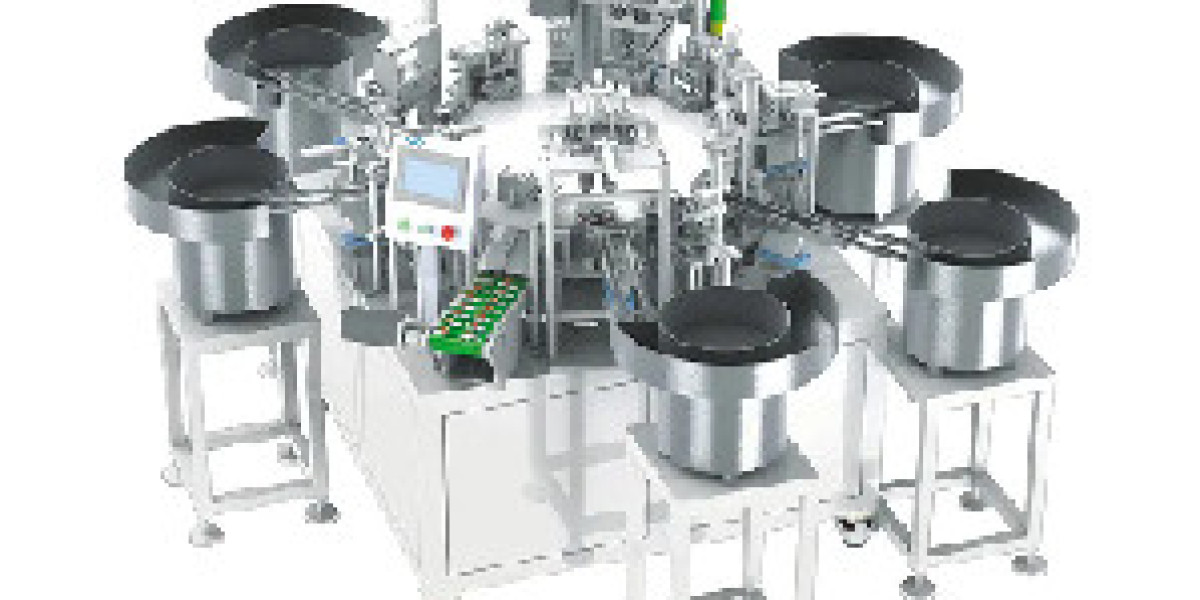

Infusion set manufacturing requires multiple production stages to work together with consistent handling and assembly procedures. As medical device manufacturers seek to improve production organization and product consistency, automation has become an important part of modern factory development. A Fully Automated Production Line for Infusion Sets connects component feeding, positioning, assembly, inspection, and product transfer into an integrated manufacturing workflow. This approach helps reduce repetitive manual operations while allowing manufacturers to manage different production stages through coordinated equipment and control systems.
An infusion set contains several components that perform different functions within the finished product. Depending on its design, these may include tubing, connectors, drip chambers, clamps, protective caps, and other plastic or flexible parts. Each component has its own shape, material characteristics, and assembly requirements. These differences influence how parts should be supplied, positioned, and connected. Before equipment development begins, manufacturers and automation engineers need to review product drawings, samples, and assembly procedures to determine the most suitable production arrangement.
Component feeding is one of the foundations of automated manufacturing. Parts must be separated, oriented, and transferred to the correct assembly stations. Different feeding mechanisms may be required for rigid plastic components and flexible materials such as tubing. The equipment should provide a stable material supply without causing unnecessary deformation or incorrect positioning. Properly designed feeding systems can reduce interruptions and help downstream stations maintain a consistent operating sequence.
The assembly section combines individual components according to the product structure. Depending on the infusion set design, operations may involve component insertion, connection, pressing, positioning, or other specialized processes. Fixtures help secure parts during assembly, while controlled mechanical movements perform the required operations. The equipment configuration should follow the actual manufacturing sequence instead of relying on a generic arrangement. When each station is properly coordinated, the complete production workflow becomes easier to supervise and manage.
Quality inspection is another essential part of infusion set manufacturing. The finished product contains multiple components, so missing parts, incorrect positioning, or visible assembly defects may affect product quality. Automated inspection systems can be integrated at suitable production stages to check component presence, assembly conditions, and other defined characteristics. Depending on the product requirements, inspection may involve sensors, cameras, or dedicated testing mechanisms. The inspection process should be designed around the manufacturer's quality management procedures and applicable production standards.
A Fully Automated Production Line for Infusion Sets can also support more systematic production monitoring. A centralized control system coordinates the operation of different stations and monitors selected machine conditions. Sensors provide information about component positioning, equipment status, and process interruptions. Operators can use the control interface to identify abnormal conditions and respond to equipment alarms. This improves visibility across the production process and helps maintenance teams investigate recurring problems.
Product variety is a practical consideration for manufacturers serving different markets. Infusion sets may have different tubing arrangements, connector structures, chamber designs, and component configurations. An adaptable equipment design can incorporate replaceable fixtures, adjustable positioning mechanisms, and configurable control programs. These functions can support product changeovers when the manufacturing plan requires multiple models. However, flexibility should be planned according to actual product differences to avoid unnecessary mechanical complexity.
The production layout also influences the performance of the entire system. Component storage, feeding mechanisms, assembly stations, inspection equipment, and finished-product collection should be arranged in a logical sequence. Transfer mechanisms need to connect different stations without creating unnecessary handling or congestion. If one station operates more slowly than the others, it may become a bottleneck. Evaluating station coordination during the design stage helps manufacturers establish a more balanced workflow.
Equipment maintenance and operator accessibility should also be considered. Machine structures need to provide practical access to frequently inspected components, while operating interfaces should present clear information about machine status. Safety arrangements around moving mechanisms and maintenance areas help support daily operation. Training and operating documentation further enable production personnel to understand equipment procedures and respond to interruptions in a consistent manner.
Successful automation development requires cooperation between the manufacturer and equipment supplier. Product samples, technical drawings, process requirements, factory conditions, and quality expectations provide the foundation for equipment planning. Testing with actual components helps verify feeding performance, assembly coordination, and inspection functions before regular production begins. AMBE TRADE develops medical manufacturing automation solutions according to customer product structures and production requirements. Manufacturers can explore its equipment capabilities at https://www.ambemedi.com/product/ when planning an integrated infusion set manufacturing system.