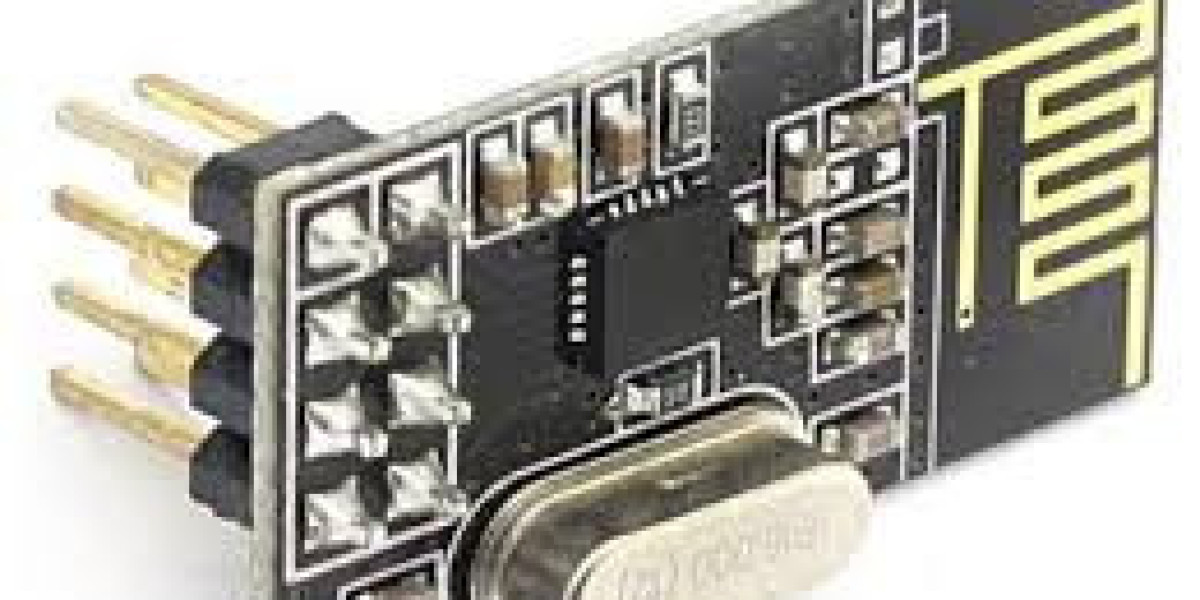

The global telecommunications landscape is currently undergoing a massive transformation, driven primarily by the rollout of 5G networks and the increasing demand for high-speed data transmission. At the heart of this technological leap is the radio frequency transceiver, a critical component that combines both transmitting and receiving functions into a single integrated circuit. As urban centers become more densely populated and the number of connected devices continues to skyrocket, the pressure on existing spectral resources has reached an all-time high. Modern transceivers must now handle wider bandwidths and higher frequency ranges, such as millimeter-wave bands, while maintaining exceptional energy efficiency and signal integrity. This complexity is not just a challenge for engineers but also a massive opportunity for stakeholders to capitalize on the Rf Transceiver Market analysis as it reflects a shift toward more integrated, smaller, and more powerful communication modules. The transition from 4G to 5G is not merely a speed upgrade; it is a fundamental redesign of how we connect, requiring hardware that can support massive Multiple-Input Multiple-Output (MIMO) configurations and advanced beamforming techniques.
Beyond the consumer mobile market, the industrial and automotive sectors are rapidly adopting advanced RF technologies to enable the next generation of automation and safety. In the automotive realm, Vehicle-to-Everything (V2X) communication relies heavily on robust RF transceivers to ensure real-time data exchange between cars, pedestrians, and traffic infrastructure. This is essential for the realization of fully autonomous driving, where latency of even a few milliseconds can be the difference between safety and a collision. Industrially, the rise of "Smart Factories" requires a seamless web of wireless sensors and actuators that can operate reliably in electronically noisy environments. These transceivers must be designed with high interference rejection capabilities and low power consumption profiles to sustain long-term operations on battery power. As we look toward the future, the convergence of satellite communications and terrestrial networks will further push the boundaries of RF design. The ability to switch between different frequency bands and protocols within a single device is becoming a standard requirement, driving a new wave of innovation in CMOS-based transceiver architectures and high-performance material integration.
What is the primary function of a transceiver in a 5G base station? The transceiver acts as the bridge between digital data and radio waves, converting outgoing digital bits into high-frequency signals for transmission and reversing the process for incoming signals.
How does beamforming technology improve wireless connectivity? Beamforming allows the transceiver to focus the radio signal directly toward a specific user device rather than broadcasting it in all directions, which significantly increases signal strength and reduces interference.
➤➤➤Explore MRFR’s Related Ongoing Coverage In Semiconductor Industry:
Remote It Monitoring And Management Services Market
Retail Branding And Marketing Services Market
Reverse Logistics Services Market
Risk Mitigation In Logistics Services Market
Route Optimization And Planning Services Market
Smart Healthcare Technology Solutions Market
Solar Energy Consulting Services Market