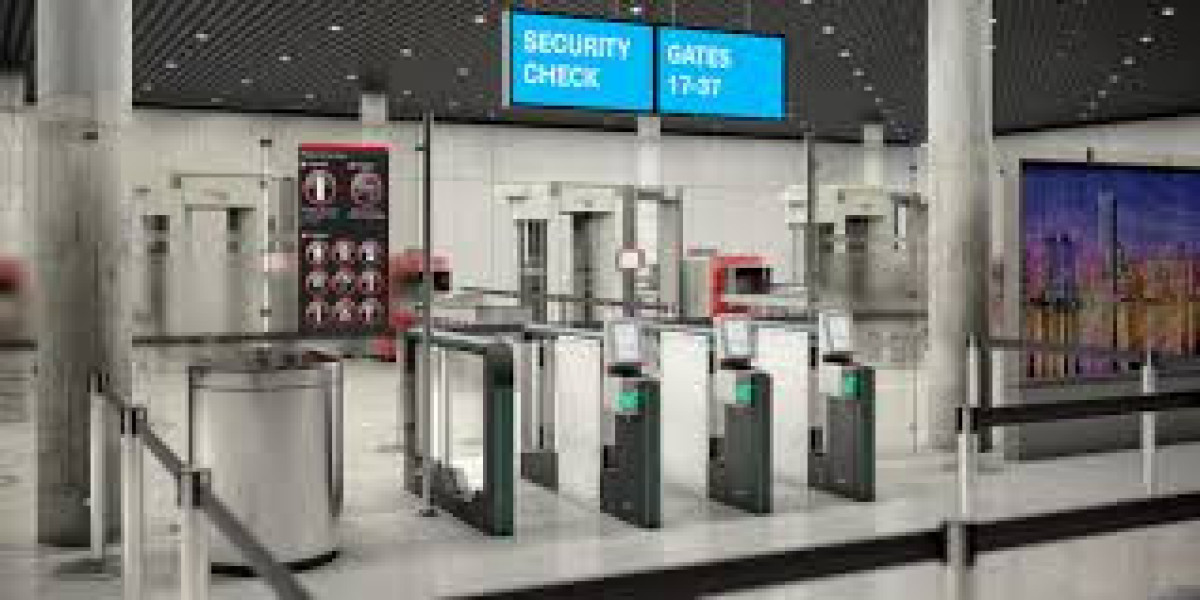

The global aviation landscape is undergoing a massive transformation as security threats become more sophisticated and passenger volumes return to record-breaking levels. Within this high-stakes environment, the Airport Access Control Market has emerged as a critical pillar for maintaining operational integrity and public safety. This sector encompasses a wide range of technologies, from biometric scanners and electronic card readers to advanced perimeter intrusion detection systems. The integration of these technologies ensures that only authorized personnel can enter restricted zones such as runways, baggage handling areas, and air traffic control towers. As airports transition into "smart" hubs, the demand for seamless yet rigorous security checkpoints has skyrocketed. Regulatory bodies across the globe are mandating stricter compliance standards, forcing airport authorities to invest heavily in multi-layered authentication frameworks. This shift is not merely about preventing unauthorized entry; it is about creating a data-driven security ecosystem that can predict potential breaches before they occur. The adoption of contactless technology, accelerated by recent global health concerns, has further pushed the industry toward cloud-based access management solutions that offer real-time monitoring and remote administrative capabilities.
The financial and operational trajectory of this industry suggests a period of sustained expansion driven by technological breakthroughs and infrastructure modernization projects in emerging economies. Stakeholders are increasingly focusing on Airport Access Control Market analysis to understand the competitive landscape and identify high-growth opportunities. One of the most significant trends is the move toward "One ID" solutions, where a passenger’s biometric profile serves as their permanent digital token for all access points. This reduces bottlenecks and improves the overall traveler experience while maintaining the highest security standards. Furthermore, the integration of Artificial Intelligence (AI) and Machine Learning (ML) is allowing for behavior analysis and anomaly detection, adding an invisible layer of protection that operates silently in the background. As regional governments invest in new airport constructions and the expansion of existing terminals, the market is poised to see a diversification of hardware and software offerings. The challenge for providers remains the balancing act between stringent security requirements and the need for operational efficiency, ensuring that the movement of thousands of people daily is not hindered by overly intrusive or slow-moving security protocols.
What are the primary types of biometric technologies currently used in airport access control? The most common biometric technologies include facial recognition, fingerprint scanning, and iris recognition, all of which provide unique identifiers that are difficult to forge compared to traditional ID badges.
How does cloud-based access control benefit airport management? Cloud-based systems allow for centralized management of multiple entry points, real-time updates to security credentials, and the ability to scale security infrastructure without the need for extensive on-site server hardware.
➤➤➤Explore MRFR’s Related Ongoing Coverage In Semiconductor Industry:
Youth Education And Development Services Market
Canada Fiber Optic Sensor Market
China Fiber Optic Sensor Market
Europe Fiber Optic Sensor Market
France Fiber Optic Sensor Market
Germany Fiber Optic Sensor Market
India Fiber Optic Sensor Market
Italy Fiber Optic Sensor Market
Japan Fiber Optic Sensor Market